


Ankle Ligament Repairs
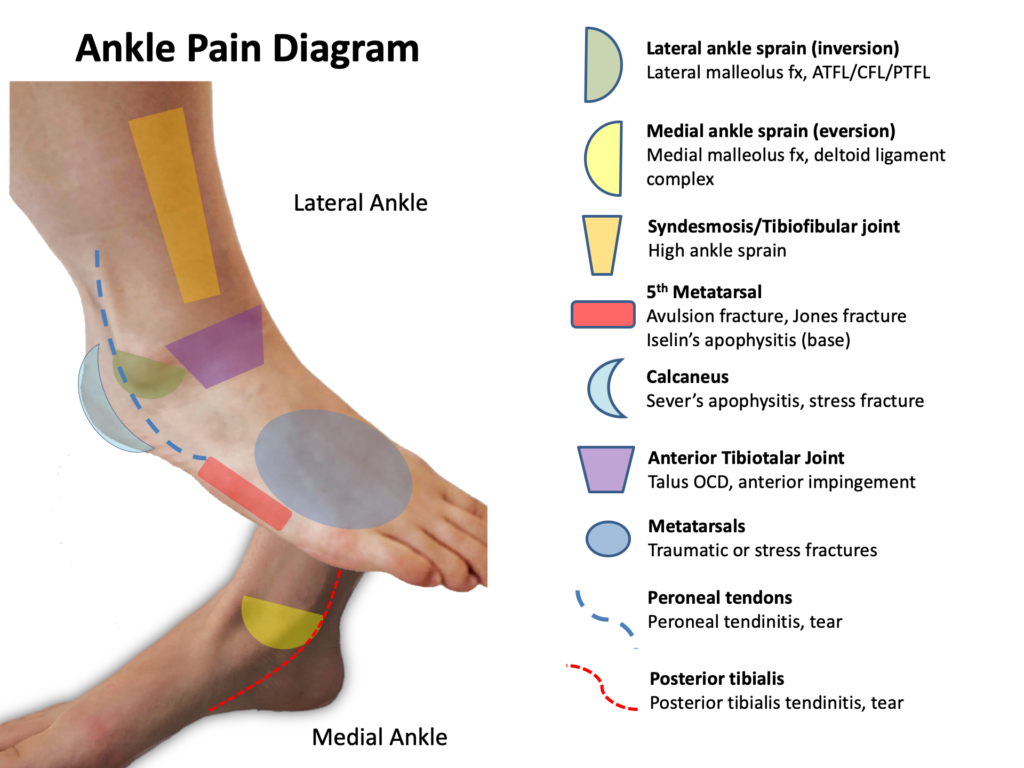
Your ankle is a hinge joint that allows motion up and down, and from side to side. Your foot and ankle have several ligaments. These are strong band-like structures that keep the bones in your ankle and feet tightly connected. On the outer side of your foot, you have several ligaments. These include the anterior talofibular ligament (ATFL) and the calcaneofibular ligament (CFL). These help keep your ankle and foot steady when you walk. When sprains occur, the ligaments stretch beyond normal capacity and tear. Ankle sprains range from mild to severe and in most cases do not require surgery. Sprains of the midfoot — called a Lisfranc injury — can often be treated successfully with non-surgical techniques as well. But in more serious cases, ligament repair surgery may be recommended.
We treat ankle injuries and conditions in our General Medicine, Sports Medicine, Orthopedics, Physical Therapy, and Imaging departments. We offer same-day and same week appointments for these injuries and conditions.
Schedule your appointment today!
Symptoms
Signs and symptoms of a sprained ankle vary depending on the severity of the injury. They may include:
Pain, especially when you bear weight on the affected foot
Tenderness when you touch the ankle
Swelling
Bruising
Restricted range of motion
Instability in the ankle
Popping sensation or sound at the time of injury

Diagnosis and Treatment
At Aptiva Health, our sports medicine and orthopedic teams utilize musculoskeletal ultrasound, an advanced imaging technology, to accurately diagnose conditions in addition to our high-field open MRI.
A musculoskeletal ultrasound uses sound waves to create images of soft tissues in the foot and ankle such as ligaments, tendons, muscles and nerves. These images are extremely detailed and can reveal the extent of damage and exact cause of all types of foot and ankle ligament conditions.
Your physician will determine the severity of your sprain by assigning a "grade" to it:
Grade 1: Minimal stretching and tiny microscopic tears in the fibers of the ligaments accompanied by mild swelling, redness and pain.
Grade 2: Partial to moderate tear of the ligaments accompanied by swelling, redness and pain.
Grade 3: Completely torn ligament accompanied by swelling, redness, pain and total ankle instability
Dependent upon the severity of the ankle injury or sprain, your doctor will determine what treatment plan will work best. For less severe sprains and ankle injuries, the following conservative treatments may be recommended:
Activity modification
R.I.C.E. (rest, ice, compression and elevation)
Anti-inflammatory medication
Compression: bracing, casting, wraps, or kinesiotaping
For more severe ankle sprains or injuries, or for chronic ankle conditions, surgery may be indicated. Dr. Ryan Eads may discuss proceeding with an ankle arthroscopy if you:
Experience chronic pain in your foot and ankle
Suffer from repeated ankle sprains
Have an ankle that gives way when walking, running or exercising
If you have severe ligament damage caused by an ankle sprain, overuse or injury, your doctor will likely recommend ankle ligament surgery.

Ankle Arthroscopy (keyhole surgery) involves examination and surgery inside the ankle joint through two or three small incisions in the skin. This enables the problem with your ankle to be assessed and treated at the same time.
Conditions that commonly require ankle arthroscopy
Loose fragments of bone or cartilage
Treatment of bony or cartilage defects
Scarring of joint lining
Excess scar tissue after injury
Biopsy
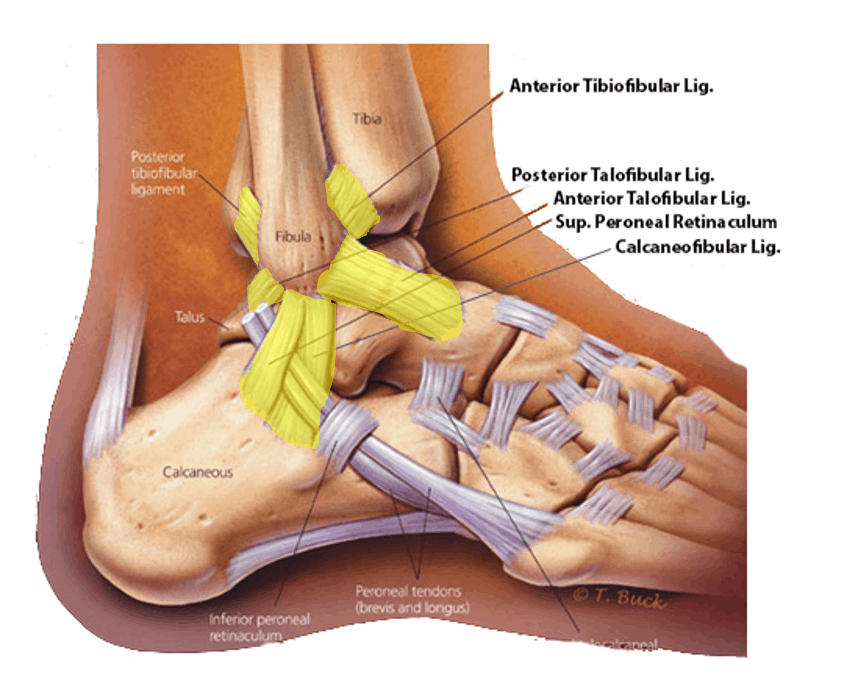
Ankle ligament reconstruction surgery is used to treat lateral ankle instability and sprains. The objective is to prevent the ankle from giving way and stabilizing it. This surgery is intended for active, healthy patients who have experienced frequent ankle sprains which has led to chronic ankle instability and pain. This surgery is typically carried out in an outpatient ambulatory surgery center where you are given a general anesthetic along with an injection around the ankle so that it’s numb and pain-free after surgery.
In some cases, the surgeon will first carry out ankle arthroscopy to inspect the joint before repairing the ligament. The procedure itself involves one incision (cut) on the outside of the ankle to allow the surgeon to locate the scar tissue from the torn ligament near the fibula bone, and carry out a repair with stitches to the bone.
Our Sports Orthopedic Team

J. Steve Smith, MD
Director of Orthopedics
Curriculum Vitae

Shawn Price, MD
Sports Orthopedic Surgery
Curriculum Vitae

Timothy Wilson, MD
Sports Orthopedic Surgery
Curriculum Vitae

D. Philip Stickney, MD
Sports Orthopedic Surgery
Curriculum Vitae
Frequently Asked Questions About Ankle Ligament Repair
Do torn ankle ligaments require surgery?
Most ankle ligament tears do not require surgery. Even complete tears often heal well with bracing, activity modification, and physical therapy. Surgery is recommended when a patient has chronic ankle instability, meaning the ankle repeatedly gives way or re-sprains despite completing conservative treatment, or when a severe tear occurs alongside other injuries such as cartilage damage or fracture.
What is the Brostrom procedure?
The Brostrom procedure is the most common surgery for lateral ankle instability. Through a small incision on the outside of the ankle, the surgeon shortens and reattaches the stretched or torn ligaments, most often the ATFL and CFL, to the fibula using sutures and small anchors. The repair is often reinforced with nearby tissue or an internal brace for added strength. It is performed as an outpatient procedure, so you go home the same day.
How do I know if my ankle ligament is torn?
Signs of a torn ankle ligament include a popping sensation at the time of injury, swelling, bruising, pain with weight bearing, and a feeling that the ankle is unstable or giving way. At Aptiva Health, our providers diagnose ligament tears with a physical exam and musculoskeletal ultrasound, and confirm the extent of the damage with on-site MRI when needed, so you get answers without being sent to an outside imaging center.
What is chronic ankle instability?
Chronic ankle instability is a condition where the outer side of the ankle repeatedly gives way during walking, running, or sports. It usually develops after an ankle sprain that did not fully heal or was not rehabilitated properly, leaving the ligaments stretched and weak. Each additional sprain further weakens the ligaments, which is why repeated ankle sprains should be evaluated by an orthopedic specialist.
How long is recovery after ankle ligament surgery?
Most patients wear a splint or cast for about two weeks after surgery, then transition to a walking boot for several weeks while beginning physical therapy. Therapy focuses on restoring range of motion, strength, and balance. Many patients return to daily activities within six to eight weeks, and return to sports is typically cleared between three and six months depending on the sport and your individual progress.
Do I need a referral for ankle ligament repair at Aptiva Health?
No. Aptiva Health does not require a referral. You can schedule a same-day appointment with our orthopedic and sports medicine team or walk in to our Immediate Injury Care Center for a new ankle injury. Call 1-844-999-3627 to schedule.
Where does Aptiva Health evaluate and treat ankle ligament injuries?
Aptiva Health evaluates ankle ligament injuries at every location: Louisville (East, Downtown, and Middletown), Lexington, Northern Kentucky (Hebron), Elizabethtown, Mt. Washington, and Indianapolis. Diagnosis, imaging, surgery coordination, and post-operative physical therapy are all managed under one roof. Call 1-844-999-3627 for a same-day appointment.

Don't Let an Unstable Ankle Slow You Down
If your ankle keeps rolling, giving way, or holding you back, our orthopedic team can tell you exactly what is damaged and what will fix it - often on your very first visit.