

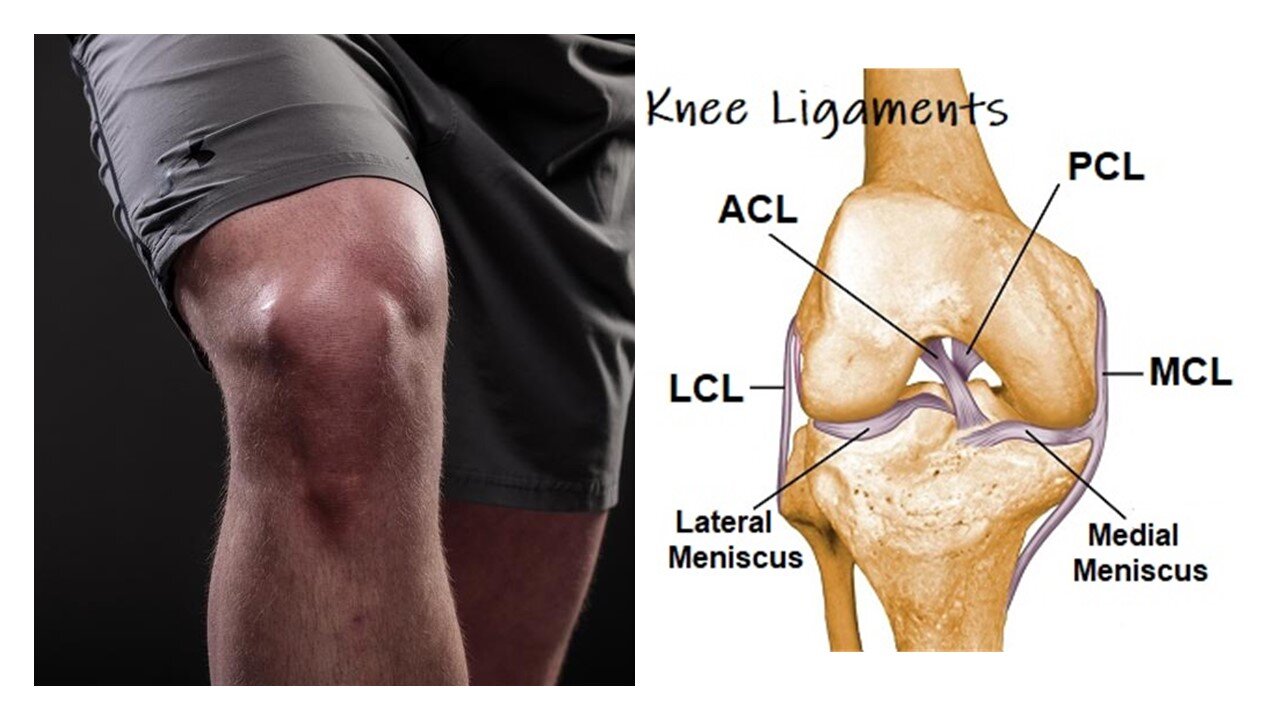
Knee Ligament Surgeries
Knee ligament repair is a treatment for a complete tear of a knee ligament that results in instability in the knee. People with a torn knee ligament may be unable to do normal activities that involve twisting or turning at the knee. The knee may buckle or “give-way.” If medical treatments are not satisfactory, ligament repair surgery may be an effective treatment.
The surgery to correct a torn knee ligament involves replacing the ligament with a piece of healthy tendon. A tendon from the kneecap or hamstring, for example, is grafted into place to hold the knee joint together. The tendon graft may come from the person (autograft) or from an organ donor (allograft).
At Aptiva Health, we offer same-day and walk-in appointments for knee injuries and conditions to evaluate, diagnose, and make the appropriate referral for additional treatment based upon your specific knee injury or condition. We treat these conditions in our General Medicine, Orthopedics, Sports Medicine, Pain Management, and Physical Therapy departments.
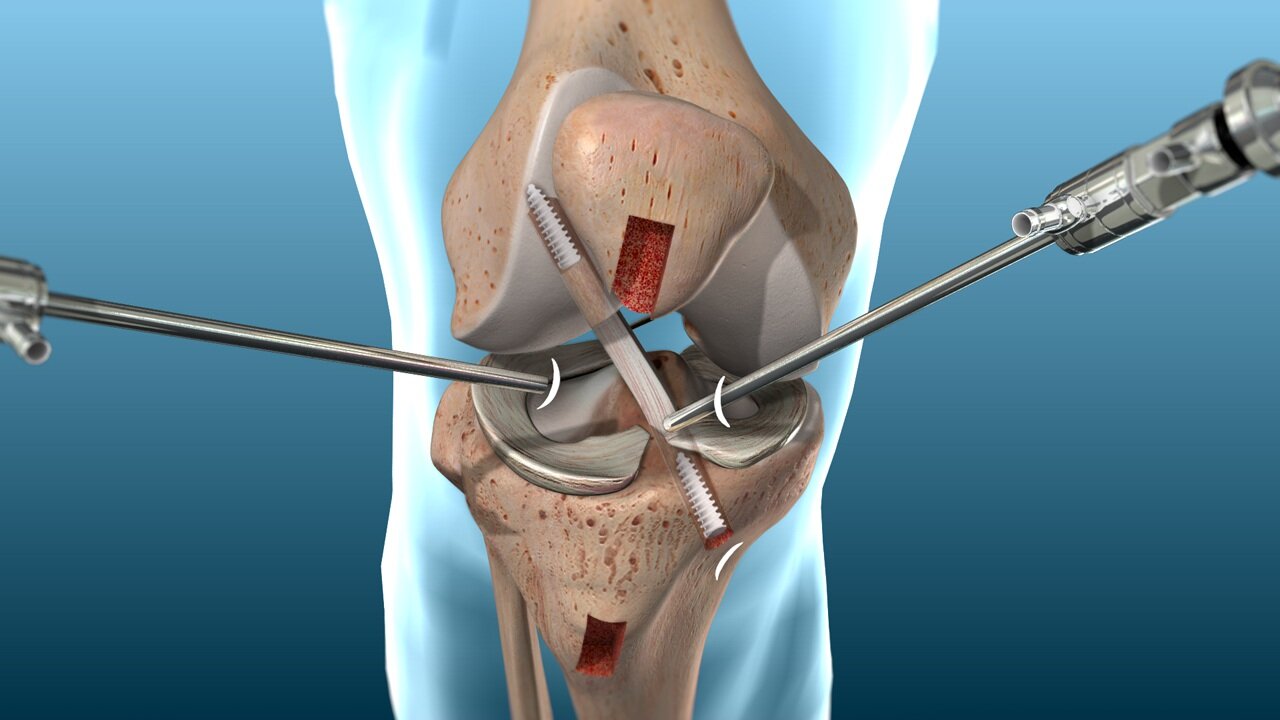
ACL Repair & Reconstruction surgeries
The anterior cruciate ligament (ACL) is located toward the front of the knee. It is the most common ligament to be injured. The ACL is often stretched and/or torn during a sudden twisting motion (when the feet stay planted one way, but the knees turn the other way). Skiing, basketball, and football are sports that have a higher risk of ACL injuries.
Types of ACL Injuries
ACL injuries are diagnosed through clinical examination and MRI, and can be classified by the amount of damage to the ligament (partial or complete disruption). Injury to the ACL is usually a complete disruption, classifying it as a Grade III complete tear.
Grade I Sprain - There is some stretching and micro-tearing of the ligament, but the ligament is intact and the joint remains stable. These injuries rarely require surgery.
Grade II Sprain (Partial Disruption) - There is some tearing and separation of the ligament fibers and the ligament is partially disrupted. The joint is moderately unstable. Depending on the activity level of the patient and the degree of instability, these tears may or may not require surgery.
Grade III Sprain (Complete Disruption) - There is total rupture of the ligament fibers. The ligament is completely disrupted and the joint is unstable. Surgery is usually recommended in young or athletic people who engage in sports that involve cutting or pivoting.

ACL Repair Versus Reconstruction
A surgical repair of the ACL refers to affixing the injured ligament back to the tibia or femur from which it has been torn. In rare cases, the ligament may have pulled off of the bone and may have taken a small piece of bone with it. In such cases, the surgeon can suture the ligament or screw the bone back down and restore some, if not all, of the ACL's function.
However, a torn ACL is rarely able to be repaired because during most tears, the ligament tears at its midpoint, like a frayed rope. Over time, the ligament may become completely disabled. Even if partially intact, a torn ACL sustains tissue damage and repair of the original ligament has shown to provide relatively poor functional results.
Reconstruction of the ACL involves rebuilding it using a new ligament. The surgeon creates a soft tissue substitute for the ligament, called a graft, that re-establishes knee stability and provides a scaffold. Miraculously, the patient’s body will recognize this graft scaffold, populate it with living cells and permanently attach it in place. Over a relatively short time (about four to six months), this new ligament will take on the appearance and function of the normal ACL. The functional results of ACL reconstruction are predictably excellent and the overwhelming majority of patients are able to get back to the same or higher degree of athletic activity without pain or instability.

PCL Repair Surgery
The posterior cruciate ligament (PCL) is located toward the back of the knee. It is also a common knee ligament to be injured. However, the PCL injury usually happens with sudden, direct impact, such as in a car accident or during a football tackle. PCL tears make up less than 20% of injuries to knee ligaments. Injuries that tear the PCL often damage some of the other ligaments or cartilage in the knee, as well. In some cases, the ligament can also break loose a piece of underlying bone.


An injury to the PCL can cause mild to severe damage. Doctors classify PCL injuries in these groups:
Grade I: The PCL has a partial tear.
Grade II: The ligament is partially torn and is looser than in Grade I.
Grade III: The ligament is completely torn and the knee becomes unstable.
Grade IV: The PCL is damaged along with another ligament in the knee.
PCL problems can be acute or chronic. Acute PCL problems are due to a sudden injury. Chronic PCL problems involve an injury that develops over time.

PCL repair surgery
Small incisions will be made around the knee. Tools will be passed through the incisions. If enough of the ligament is intact, the damaged PCL may be reattached to the bone. Any tears in the ligament will be repaired.
If the PCL needs to be reconstructed, a tendon from another part of the body or a donor will be used. The remains of the damaged ligament will be cleaned away from the knee joint. Small incisions will be made in the thighbone and shinbone. The new tendon will be threaded through the incisions and held down with screws or staples. The incisions will be closed with stitches and covered with bandages.


MCL Repair Surgery
The medial collateral ligament (MCL) is located on the inner side of the knee. It is injured more often than the lateral collateral ligament (LCL), which is on the outer side of the knee. Stretch and tear injuries to the collateral ligaments are usually caused by a blow to the outer side of the knee, such as when playing hockey or football.
The right MCL treatment plan will depend on the severity of your tear. Grade I and Grade II tears can heal on their own within a few days to a few weeks as long as you get plenty of rest.
Since Grade III MCL injuries are complete tears, the ligament is unable to heal itself and surgery is needed. Surgery may also be needed if there is any grade of an MCL tear along with other ligament issues.
A nonsurgical treatment plan will include some or all of the following:
Applying ice to reduce swelling
Taking anti-inflammatory medication to reduce pain and swelling
Using an elastic bandage or brace to compress the knee
Walking with crutches to keep the weight off the injured knee
Limiting activities that could cause reinjury or disrupt healing
Physical therapy to regain strength

During MCL surgery, the orthopedic surgeon will make small incisions in your knee and insert an arthroscope, which is a small tube-shaped instrument. Methods for reattaching or reconstructing the torn ligament can vary. Options include using a portion of the patellar tendon (which connects the tibia and the kneecap) or the hamstring tendon (from the back of the thigh). Tendon grafts can come from the patient or an organ donor.

lcl repair surgery
The lateral collateral ligament (LCL) does not heal as well on its own compared to other knee ligaments, such as the medial collateral ligament (MCL). When an LCL tear fails to adequately heal, or if the tear is severe, surgery to repair or reconstruct the LCL may be recommended.
Repair surgery is most often done on two types of LCL tears.

The first is when the damage is located where the ligament attaches to the thighbone (femur) or shinbone (tibia). The surgeon will reattach the torn ligament to the bone using large sutures (strong medical thread), screws, or staples; LCL repair is typically an open procedure because the LCL is located outside the knee joint and cannot be visualized with an arthroscope (a tiny camera placed in the knee joint).
The other type of repair surgery is performed when the LCL is torn in the middle. In these cases, the surgeon will use strong and durable surgical thread to sew the torn ends back together. This surgery is only appropriate if the tear is relatively recent (within a few weeks from when the injury occurred).
Knee Ligament Surgery FAQs
Knee ligament injuries can affect your stability, movement, and ability to participate in everyday activities. Explore answers to common questions about ACL, PCL, MCL, and LCL injuries, including when surgery may be considered and how Aptiva Health can help you take the next step.
What is knee ligament surgery?
Knee ligament surgery repairs or reconstructs a torn ligament to help restore stability in the knee. A repair reconnects the existing ligament when possible, while a reconstruction replaces the damaged ligament with a tendon graft.
Which knee ligaments can be repaired or reconstructed?
Surgery may be performed on the four major knee ligaments:
Anterior cruciate ligament, or ACL
Posterior cruciate ligament, or PCL
Medial collateral ligament, or MCL
Lateral collateral ligament, or LCL
The appropriate treatment depends on which ligament is injured, the severity of the tear, knee stability, activity goals, and whether other parts of the knee were also damaged.
Do all torn knee ligaments require surgery?
No. Some partial ligament tears can improve with nonsurgical care, such as activity modification, bracing, medication, or physical therapy. Surgery may be considered when a complete tear causes ongoing instability, the knee repeatedly buckles or gives way, multiple ligaments are injured, or nonsurgical treatment has not provided enough improvement.
How is a torn knee ligament diagnosed?
A healthcare provider will review how the injury happened, discuss your symptoms, and examine the knee’s movement and stability. Imaging, such as an MRI, may also be used to understand the location and severity of the injury and help determine the appropriate next steps.
What is the difference between ACL repair and ACL reconstruction?
ACL repair reconnects the existing ligament when it has pulled away from the bone and can be securely reattached. ACL reconstruction replaces the damaged ligament with a tendon graft. Because many ACL tears occur through the middle of the ligament, reconstruction is more commonly considered than repair. Your orthopedic provider will determine which approach may be appropriate for your injury.
What type of graft is used for knee ligament reconstruction?
A ligament reconstruction may use a tendon from your own body, known as an autograft, or donor tissue, known as an allograft. Common graft sources include the hamstring or patellar tendon. Graft selection depends on the injury, procedure, activity level, and your surgeon’s recommendation.
Do MCL tears usually need surgery?
Many Grade I and Grade II MCL injuries can be treated without surgery. Surgery may be considered for a complete Grade III tear, persistent knee instability, or an MCL injury that occurs with damage to another ligament. A personalized evaluation is necessary to determine the appropriate treatment plan.
Can PCL and LCL tears require surgery?
Yes. A complete PCL tear, a combined ligament injury, or significant knee instability may require repair or reconstruction. Surgery may also be considered for a severe LCL tear or an injury that has not healed adequately. Treatment depends on the location, severity, and timing of the injury.
Is physical therapy part of knee ligament treatment?
Physical therapy may be included in both nonsurgical treatment and recovery after ligament surgery. A physical therapy program can focus on mobility, strength, balance, and a gradual return to daily or athletic activities. Your treatment plan will be based on your specific injury and goals.
How long does recovery from knee ligament surgery take?
Recovery varies based on the ligament involved, the type of procedure, additional knee injuries, and your rehabilitation progress. Healing and rehabilitation generally take several months. Your orthopedic and physical therapy teams will provide a personalized timeline for returning to work, exercise, sports, and other activities.
Can Aptiva Health evaluate a knee ligament injury quickly?
Aptiva Health offers same-day and walk-in appointments for many knee injuries and conditions. Our team can evaluate your symptoms, identify the appropriate next steps, and coordinate additional orthopedic, sports medicine, imaging, pain management, or physical therapy care when needed. Appointment availability may vary by location.
How do I schedule a knee injury evaluation?
Schedule an appointment online or call Aptiva Health at 1-844-999-3627. Our team will help connect you with the appropriate location and service for your knee injury.
This information is intended for general education and does not replace an evaluation or treatment recommendation from a qualified healthcare professional.